











Tutorial I
Ding-Bing Lin, Electronic and Computer Engineering Department, National Taiwan University of Science and Technology
Abstract -
With the rapid advancement of artificial intelligence, demand for high-speed data transmission in data centers continues to surge, driving fast growth in high-speed communication technologies. Consequently, optimizing the transmission characteristics for next-generation high-speed interconnect components has become a critical research priority. While full-wave electromagnetic simulation offers high accuracy, its heavy computational cost often leads to prolonged design cycles.
This talk first addresses single differential via design, where a deep neural network trained on geometric and physical parameters predicts time-domain reflectometry responses, and is integrated with a genetic algorithm for automated optimization. Next, for multi-channel crosstalk analysis, where full-wave simulation becomes prohibitively time-consuming, Gaussian Process Regression accurately predicts responses with quantified uncertainty using far fewer training samples than machine learning, and is combined with Differential Evolution to rapidly determine optimal ground return via placement. Finally, owing to their low-loss, low-cost advantages, dielectric waveguides are explored as promising alternatives to copper interconnects and optical fibers, with design spanning material selection, dimensions, and structure for future automotive sensor and data center interconnect applications.
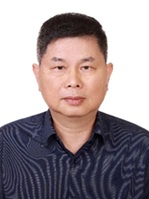
Ding-Bing Lin received the M.S. and Ph.D. degrees in electrical engineering from National Taiwan University, Taipei, Taiwan, in 1989 and 1993. From 1993 to 2016, he was on the faculty of the Electronic Engineering Department, National Taipei University of Technology, where he was an Associate Professor, a Professor, and a Distinguished Professor in 1993, 2005, and 2014. Since 2016, he has been with National Taiwan University of Science and Technology, where he is currently a Professor of the Electronic and Computer Engineering Department. His research interests include wireless communication, antennas, high-speed digital transmission, and microwave engineering. From 2015 to 2018, he served as Taipei Chapter Chair of the IEEE EMC Society, and from 2022 to 2025 as Taipei Chapter Chair of the IEEE AP Society. He also served on the Editorial Board of the International Journal of Antennas and Propagation from 2014 to 2025, and has been an Associate Editor of IEEE Transactions on Electromagnetic Compatibility since 2019. Dr. Lin has published more than 250 papers in international journals and conferences. He received the Annual Research Outstanding Award of the College of Electrical Engineering and Computer Science in 2004, 2006, and 2008, the Taipei Tech Annual Outstanding Research Award in 2008, and the Annual Research Outstanding Award of NTUST in 2024